Myopia Control Treatment in Bangalore
Specialized clinic to slow nearsightedness progression using glasses, drops, or contacts.
Book Appointment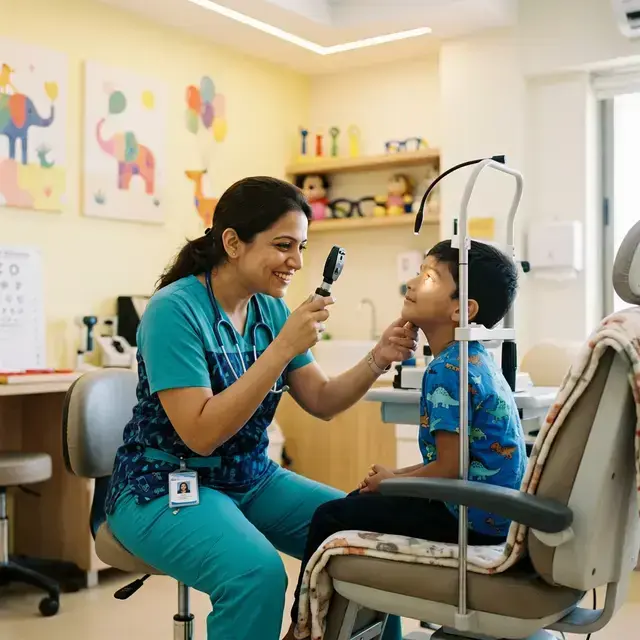
About This Treatment
Myopia, or nearsightedness, is a problem of the eye growing too long. Higher levels of myopia carry a significantly increased risk of potentially blinding retinal complications. Global estimates showed the prevalence of myopia will increase from about 20% now to 50% by 2050. The Myopia Control Clinic at Navkiran Netralaya is headed by Dr Pallovee C Palaniswamy who specializes in management of children and young adults with myopia.
What Causes Myopia?
Myopia arises from the excessive growth with the elongation of the eyeball. This results in light rays from distant objects focusing in front of the retina instead of on the retina. Distant objects are thus seen to be blurred but near objects remain clear. The younger a child develops myopia, the higher are the potential risks for the child’s eye health.
High myopia is -6.00D or greater. High myopia is a concern because it can lead to serious complications. Complications related to high myopia include:
- Posterior subcapsular cataracts
- Glaucoma
- Myopic macular degeneration
- Retinal detachment
- Myopic strabismus
If the myopia is progressing, early interventions are critical. It is very important to slow myopia progression before high myopia develops.
Myopia Control Strategies include:
- Environmental factors and Lifestyle Modifications.
- Special Type of Myopia Control Spectacle lenses like DIMS AND H.A.L.T
- Low Dose Atropine Eye drops
- Contact Lenses for Myopia
- Orthokeratology Contact Lenses
Follow-Up and Monitoring
Follow up visits for children with progressive Myopia is a must and based on the Myopia management method you choose, you will need to meet the Ophthalmologist every 3 – 6 months. This helps the doctor to monitor the Myopia progression and make changes necessary to ensure minimal progression.
Also for parents that are looking at correction through LASIK in the future please remember that if the power is beyond -6.00D – this operation is not feasible.
Every diopter of control improves the quality of life of your child ! Hence be alert and promptly consult to diagnose and manage your child’s myopia today!
Other Services
Cataract Surgery
Advanced surgery to remove clouding lens and restore vision through safe lens replacement.
Micro Incision Cataract Surgery (MICS)
Advanced approach to cataract surgery through incision less than 1.8 mm, leading to improved outcomes.
Phacoemulsification Cataract Surgery
Modern ultrasound-based cataract removal using tiny probes for painless vision restoration.
Common FAQs
Ready to get started?
Schedule your appointment today and take the first step towards better vision.