
Advanced Glaucoma Treatment in Bangalore
Expert screening and management to prevent irreversible vision loss from optic nerve damage.
Book Appointment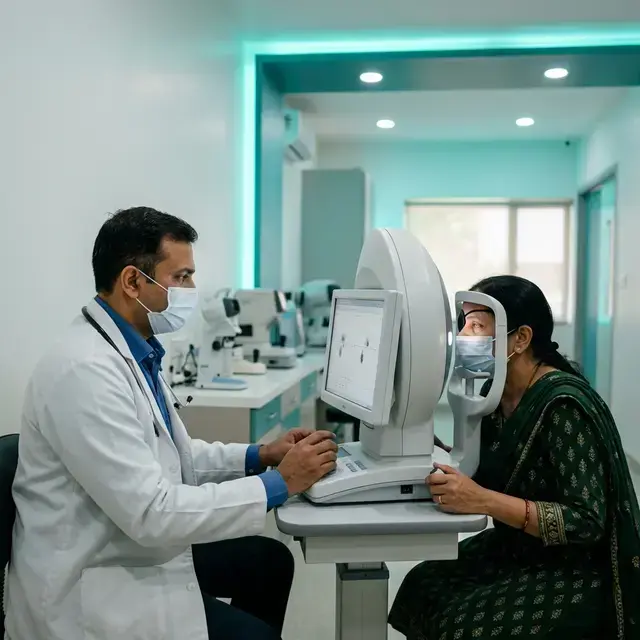
About This Treatment
Glaucoma is a condition of the eye where the optic nerve is damaged due to high pressure ultimately resulting in blindness. Glaucoma is a leading cause of irreversible blindness especially among the older population. Glaucoma is a “silent thief of sight” because there are no noticeable symptoms in the early stages. Early detection and regular treatment can prevent further damage to optic nerve and prevent vision impairment and blindness.
Symptoms that suggest the presence of chronic or acute glaucoma may include:
- Reduced vision during nights and blurry illumination
- Gradual decrease of side vision with the progression of glaucoma
- Sensation of a blind area
- Headaches in the early morning or after dusk
- Coloured halo rings seen around light bulbs especially in the mornings and nights
- Frequent change of reading glasses, headaches, pain, and redness of the eyes.
Glaucoma risk factors
- History of glaucoma in the family, especially a sibling relationship.
- Diabetics
- Over the age of 45
- Near-sightedness (myopia).
- Far sightedness (hyperopia)
- Any injury to eyes.
- Secondary to other ocular conditions – cataract, inflammation, tumours etc.
- Long-term medication (cortisone)
- Individuals with high blood pressure are at a higher risk of developing optic nerve damage.
Treatment may include
- Helps to lower pressure and drain the fluid from the eye.
- Surgery. The purpose of surgery is to create a new opening for fluid to leave the eye. This can be done by creating a passage for drainage or by implanting a shunt to help drain the fluid.
- Laser procedures. Several types of laser procedures are used to treat glaucoma.
- Cataract surgery: Cataract surgery has been shown to reduce eye pressure in most cataract patients and in some situations it may be used as a treatment for glaucoma.
Other Services
Cataract Surgery
Advanced surgery to remove clouding lens and restore vision through safe lens replacement.
Micro Incision Cataract Surgery (MICS)
Advanced approach to cataract surgery through incision less than 1.8 mm, leading to improved outcomes.
Phacoemulsification Cataract Surgery
Modern ultrasound-based cataract removal using tiny probes for painless vision restoration.
Book Consultation
Expert care for Glaucoma Diagnosis & Surgery by our senior specialists.
Schedule NowCommon FAQs

Ready to get started?
Schedule your appointment today and take the first step towards better vision.